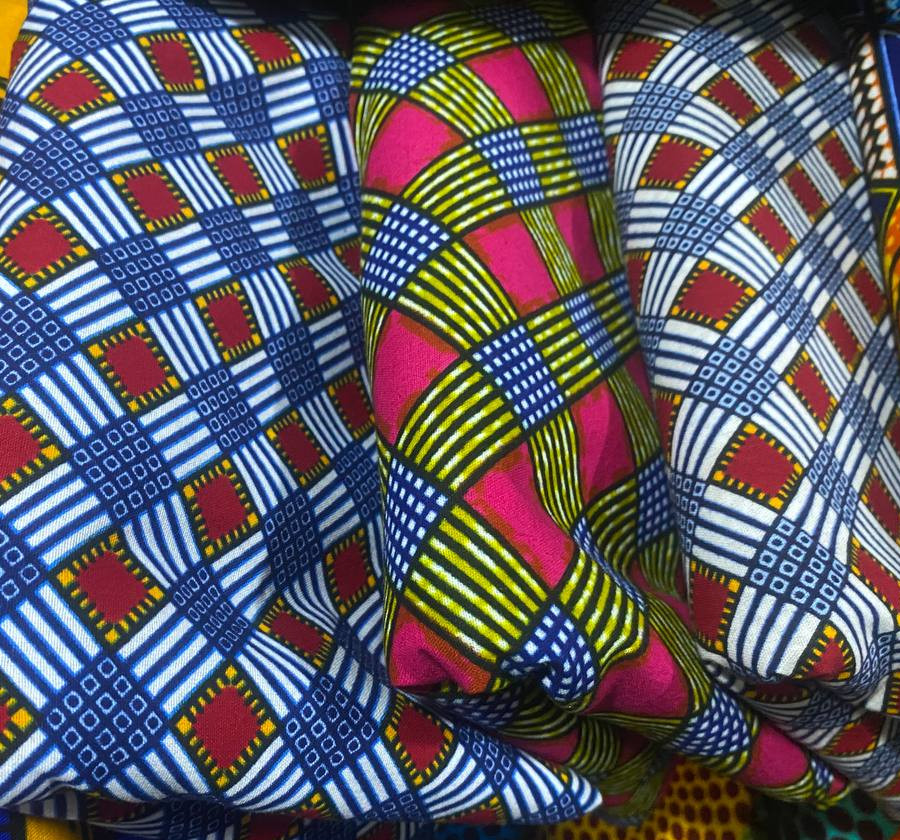
Wax fabric (also known as Ankara) is considered quintessential African culture. It is no surprise therefore that its fabrication and trade has become a symbolic discourse on China’s incursion on local African markets as cheap ‘Made in China’ wax fabrics have taken. “Nigeria’s Traditional Textile Threatened by Chinese Imports”, a Voice of Africa headline reads. Of the 130 million yards of textile sold in Ghana in 2017, 100 million were produced in China, another business observer reports (Africans on China 2020). And yet, what looks like a classic case of cheap Chinese products pushing local, traditional and hand-crafted products aside, becomes at a closer look a story of globalisation created by 19th century European imperialism.
In many parts of Africa there existed a strong tradition of textiles before the invasions of the Europeans, like Egyptian linen, Congolese raffia called Kuba, or Adire, a Yoruba cotton cloth dyed in a tie-and-dye style similar to what is today sold as ‘wax’. However, in the common blindness of European colonisers, these textile industries were either ‘savage’ (i.e. producing clothes that did not correspond to the chastity imaginaries of 19th century puritans for sub-Saharan Africa; or, on the contrary, not a sign of ‘modern’ clothing for Arab Africa) or a competitor to English, Dutch or French textile industries.
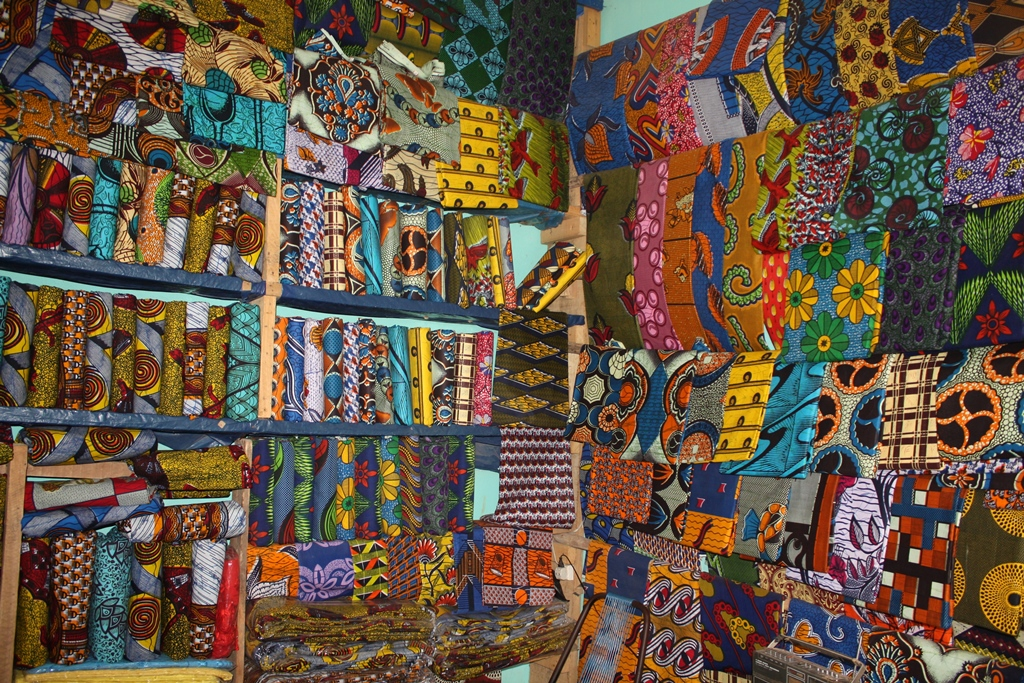
Consequently, in Nigeria and Ghana, British colonial administration in the 19th century dismantled pre-colonial cotton industries that threatened the dominance of British manufacturing sites in England’s midlands. Instead, they swamped African markets with textiles produced in other colonies (in European factories of course) and in Europe. What is known today as ‘wax’ is an example of this. Wax fabric is a colonial invention from the times the Dutch mechanised Indonesian batik making. Indonesians rejected the mechanic prints as inferior, and hence the fabrics were sold to missionaries in Africa who resold to local markets.
Starting after World War I, the British hesitatingly invested in rebuilding textile industries in Nigeria which remained dominated by British capital, machinery and know-how up to the 1970s. Structural adjustment policies of the 1980s induced a decline in the national industry, leaving in the 2000s only small scale, local family businesses and large multi-national companies like the Dutch Vlisco on the market. It is these small scale local and family businesses that are, since the 2000s, threatened by Chinese imports which are cheaper at similar quality. Since the commerce in print fabrics was in many countries in the hands of market women and imported fabrics are not sold on the market, the changes to production and sale of textiles in West Africa has had a greater negative impact of female revenue.